~ Established 1956 · Reissued Today ~

TheClicker

A hand-built bridge between 1956 and 2026. Hear the chime of an ultrasonic tuning rod — watch your modern computer obey.

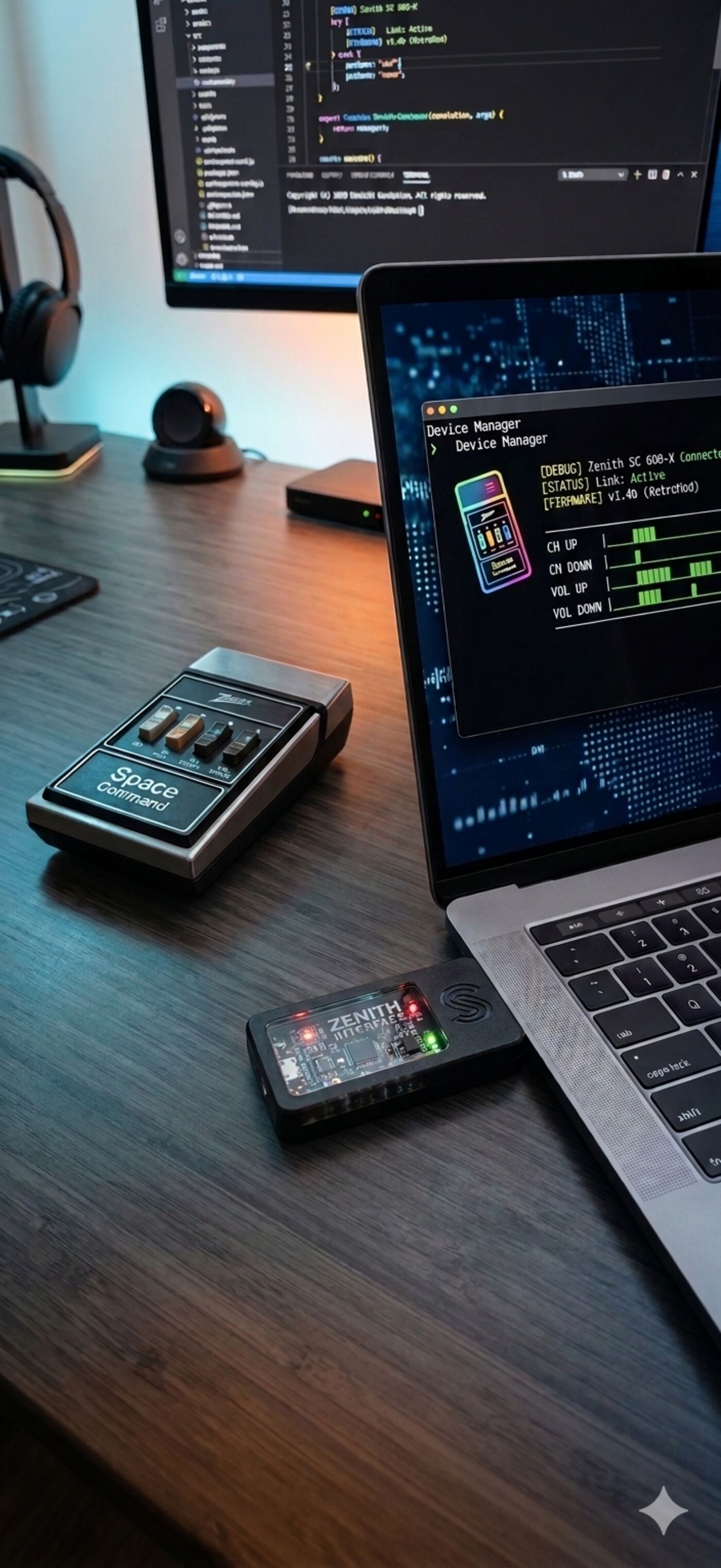
Zenith Space Command remote on a desk beside TheClicker USB bridge with a laptop showing live ultrasonic capture

Chapter One

No Batteries.
No Radio.
Just Physics.
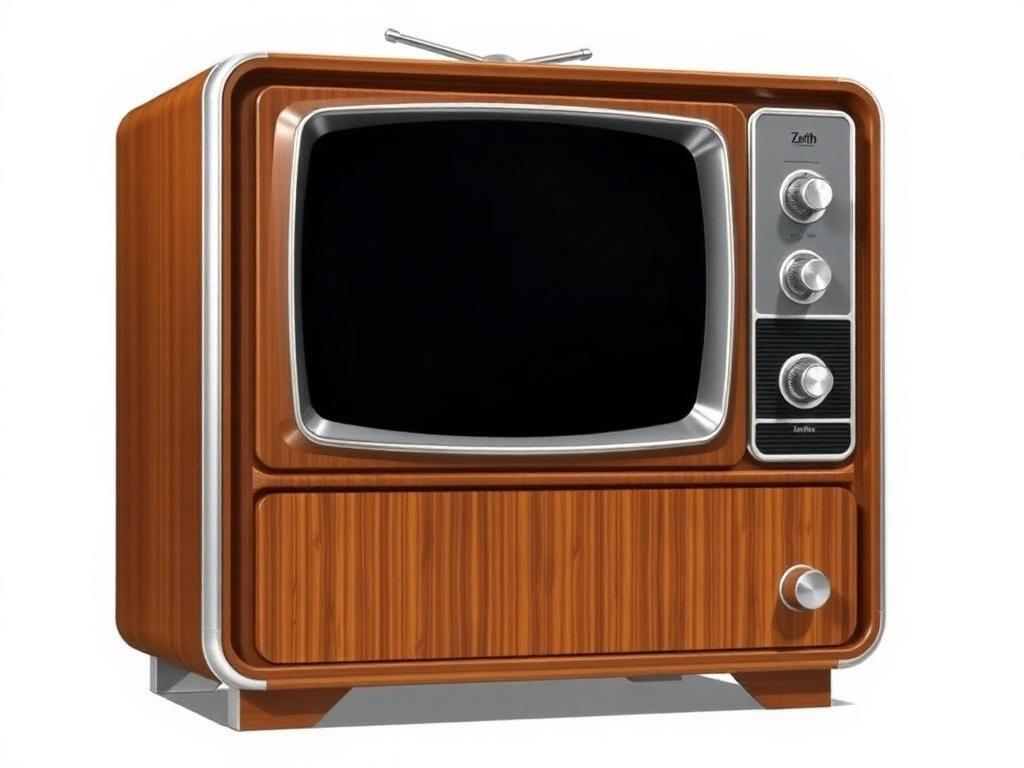
Vintage 1956 Zenith console television in walnut cabinet

In 1956, Zenith engineer Robert Adler built the world's first practical wireless TV remote. Each of its four buttons mechanically struck a small aluminum rod of a different length — like a tiny chime — producing a distinct ultrasonic tone between 37.75 and 43.25 kHz.

That click-clack you heard? That's where the word "clicker" came from. The name outlived infrared, batteries, Bluetooth, and Wi-Fi.

Fun Fact

You could jingle your keys in the air and make a noise the TV would go nuts over — changing channels, voluming around based upon the entropy of ultrasonic waves generated.
Frequency Map

  • CH UP37.75 kHz
  • CH DOWN39.25 kHz
  • VOL UP41.75 kHz
  • VOL DOWN43.25 kHz

Technical Briefing

How It Works

The Whole Signal Path

A ceramic ultrasonic element hears the burst. A cheap dual op-amp drags the tiny waveform up by roughly two orders of magnitude. A comparator hard-limits it into logic. The 32U4's capture hardware timestamps the edge train.

Recognition, Not Decoding

The firmware does not decode data so much as recognize timing fingerprints. Each button produces a different period, and that period maps straight into a USB HID consumer-control event.

Plug & Play

To the host, nothing exotic is happening. It just sees another keyboard pressing media keys. macOS, Windows, Linux — all of them already speak the language.

Limited First Run

Reserve
Your Bridge.

Hand-soldered in small batches. Be among the first to plug a 70-year-old remote into your 2026 keyboard stack.

  • ◉ No spam. No tracking pixels. No data brokers.
  • ◉ One transmission when units ship.
  • ◉ Cancel by replying STOP.
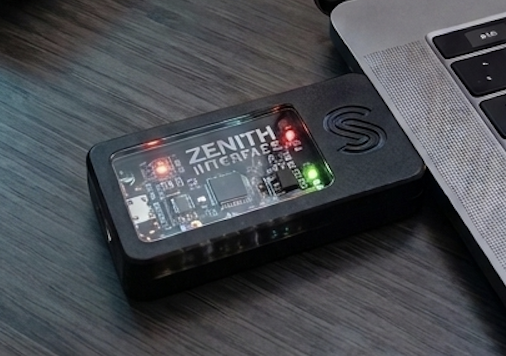
Close-up of TheClicker USB bridge plugged into a MacBook, showing the Zenith Interface circuit board with red and green status LEDs

↑ The bridge, in the wild